


News
07.04.2026
“Siegfried” from London ROH in 1,500 cinemas across 50 countries
Pictures: The Royal Opera ©2026 Monika Rittershaus.
A report by Selma Gudmundsdottir, written after seeing Siegfried live in London and again a week later in a cinema in Vienna.
Selma Gudmundsdottir
The Royal Opera House in London has once again demonstrated remarkable generosity in sharing its productions with audiences worldwide through cinema broadcasts.
A report by Selma Gudmundsdottir, written after seeing Siegfried live in London and again a week later in a cinema in Vienna.
I was recently asked what my favourite Der Ring des Nibelungen production was. Earlier this year, I had written very favourably about David McVicar’s new Ring at La Scala, so the question initially seemed straightforward. Yet it proved surprisingly difficult. Without doubt, the Chéreau Ring would probably always remain my favourite—although I never experienced it live. Beyond that, however, I have seen at least ten different productions and found it hard to choose.
But if I were asked today which Siegfried stands above all others, there would be no hesitation: Barrie Kosky’s Siegfried in London.
I must confess that I have always found Siegfried a challenging opera. In fact, it was my first Wagner opera. As a student at the Musikhochschule in Hannover, I attended a performance with fellow students. During the first act, I felt extremely bored and disengaged—two tenors shouting at each other endlessly, or so it seemed to me at the time. I was tempted to leave, but did not want to admit this to my friends. So I stayed for the entire five hours. In the end, the final hour redeemed everything—Wagner, after all, rarely fails to reserve his finest inspiration for the conclusion.
Even more recently, during McVicar’s Siegfried in Milan, I found myself again struggling during the first act, reflecting that the music had never fully appealed to me—though in other respects there was little to criticise.
A few weeks later, I happened to pass through London to visit a friend. By chance, I discovered that Barrie Kosky’s Siegfried, part of his emerging new Ring cycle, would be performed during my stay. Obtaining a ticket was not easy, but I succeeded—as I often do. I had previously seen Kosky’s Die Walküre in the cinema in Reykjavik and had been quite impressed. Still, nothing had prepared me for what I was about to experience.
This Siegfried became, beyond any doubt, the finest opera production I have ever witnessed. All earlier feelings of boredom and detachment vanished completely. What had changed?
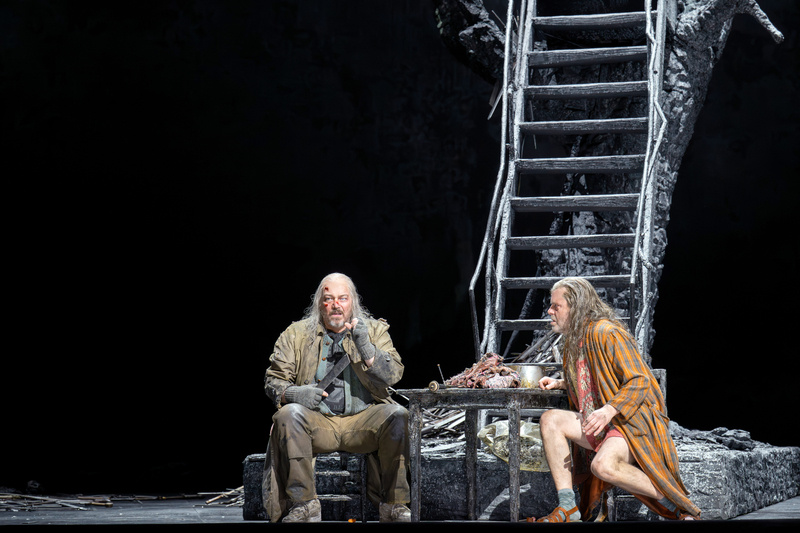
Let us begin with the first act. Andreas Schager delivers an electrifying portrayal of Siegfried from the very first moment. His youthful physicality, his boyish enthusiasm, and his restless movement on stage are utterly convincing. Equally compelling is his inexhaustible energy, lasting to the very end. Kosky’s staging gives remarkable psychological depth to the character: we see Siegfried’s identity crisis unfold as he grows up in isolation with the grotesque Mime, knowing no one else but the animals and birds of the forest. He observes them—their family structures, their bonds—and contrasts them with his own situation. Could this repellent Mime truly be his father? And what of his mother?
Although he longs desperately to escape Mime, he repeatedly returns, driven by the need to uncover his origins—even if he must wrest the truth from him. Despite the bleakness of his circumstances, he remains vibrant, curious, and full of life. Both dramatically and vocally, Schager’s performance is extraordinary. He seems born for the role, singing with ease, clarity, and authority.
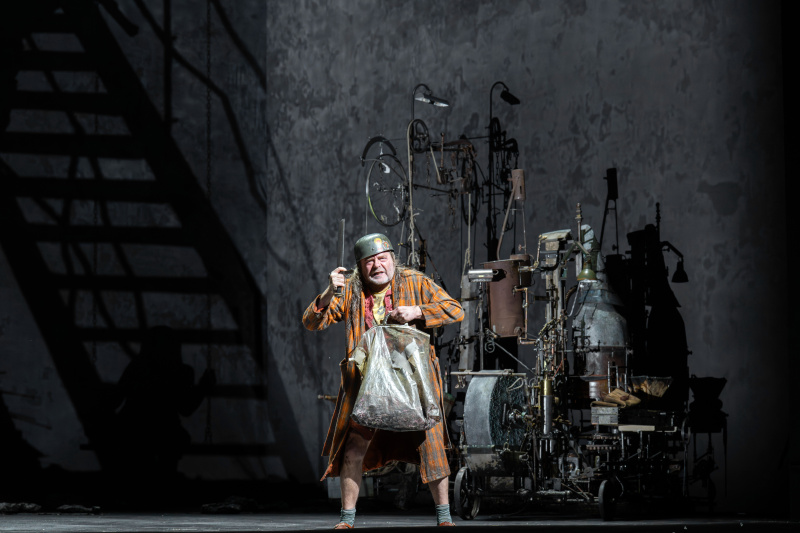
Peter Hoare’s Mime is equally remarkable. The role offers endless opportunities for grotesque characterisation, and Hoare seizes them all. His Mime is a masterclass in acting: every gesture, every facial expression, every vocal inflection is meticulously crafted. As one critic aptly observed, he is “the very incarnation of incompetent malice.” This interpretation will surely be remembered—and deserves to be.
Yet it is not only the brilliance of these performances, guided by Kosky’s masterful direction and Antonio Pappano’s revelatory conducting, that makes the production so compelling. Pappano uncovers a wealth of new sonorities in the score, making the music feel freshly discovered.
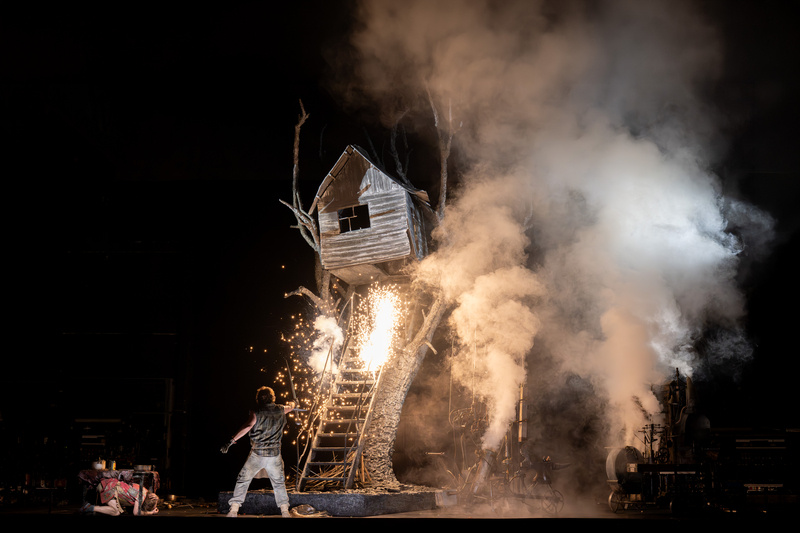
The visual world is equally striking. The first act opens with an almost fairy-tale image: Mime’s hut perched high in a tree, accessible only by a steep ladder. In his mounting frustration, Mime hammers futilely at the sword fragments, even beating his helmet against his head in rhythm with the orchestra. Once he learns from the Wanderer that only one who knows no fear can reforge Nothung, he realises that Siegfried alone is capable of forging Nothung.
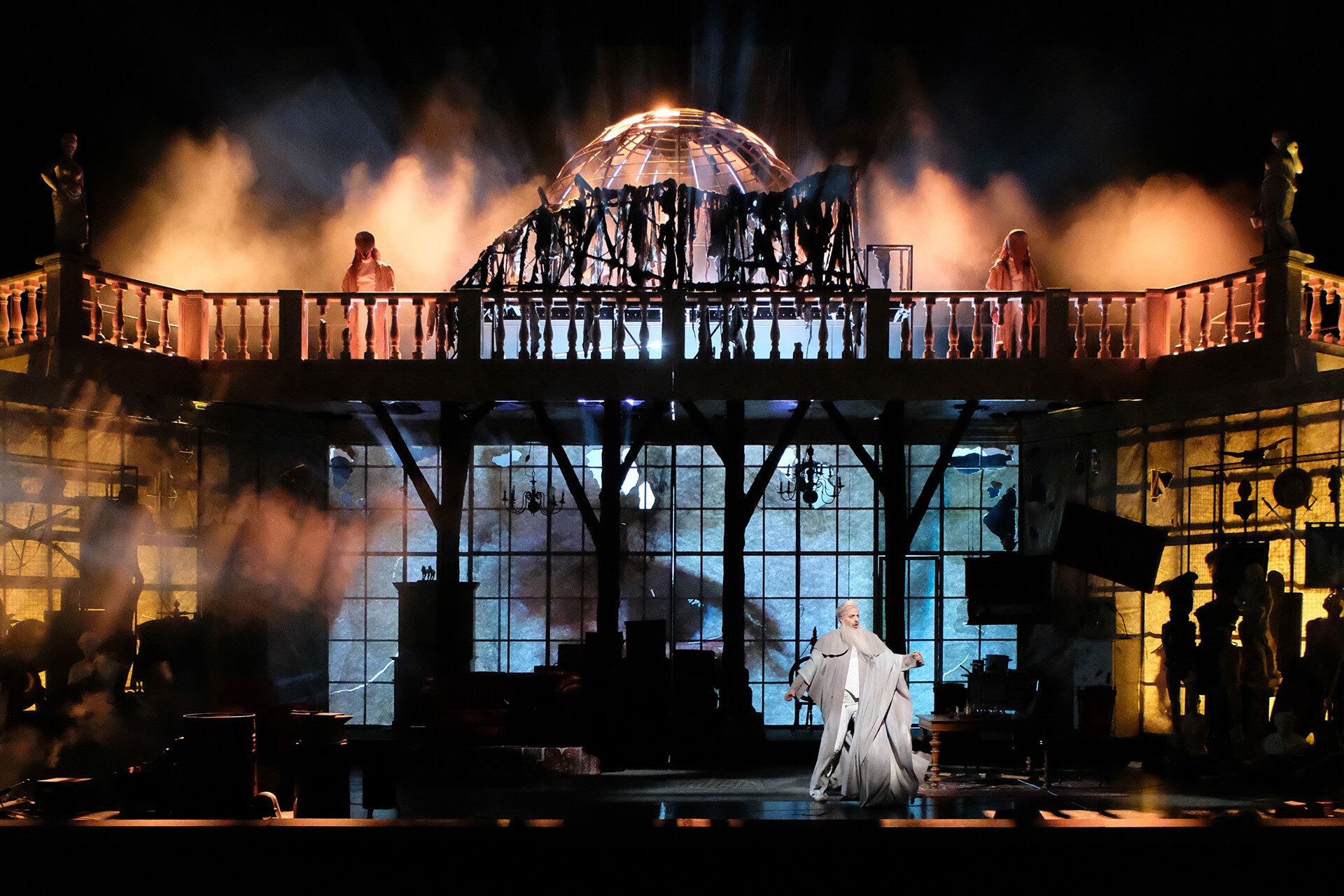
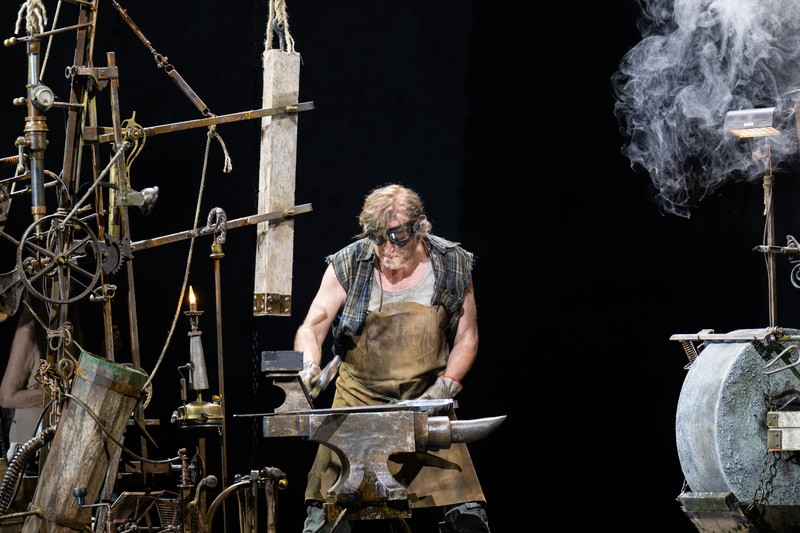
Siegfried’s forging scene becomes a theatrical spectacle of astonishing imagination. He brings on stage complex, almost surreal machinery—unlike anything one has seen before—accompanied by noise, smoke, and fire as the sword is melted down and reforged. Throughout, his exuberant energy never falters.
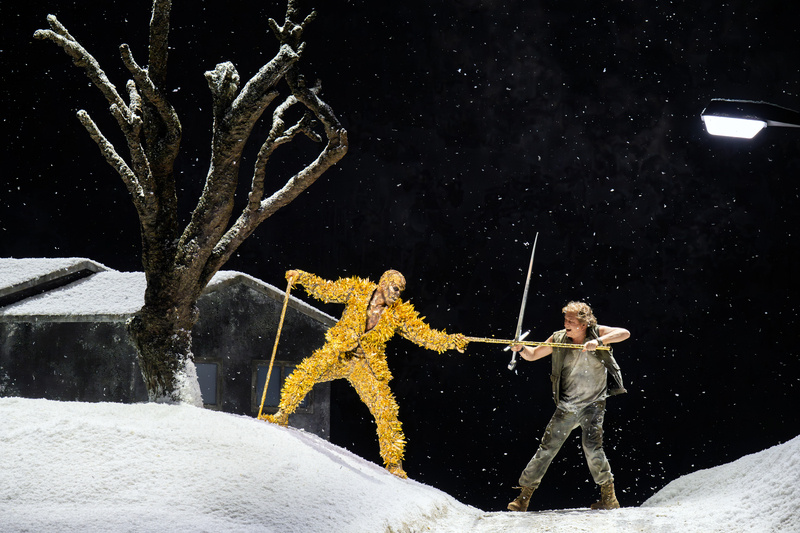
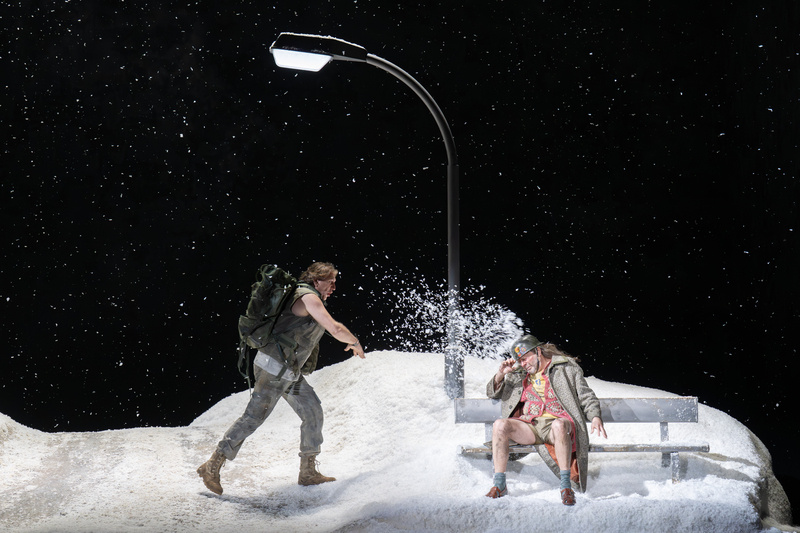
The second act presents a complete transformation. Fafner’s lair appears as a snow-covered hill. Erda is present throughout, often seated on a bench, functioning as a kind of visual leitmotif across the cycle. During the Woodbird scene, she even assumes the role of the bird, with feathers and elongated fingers, moving her lips as though she were singing.
The interplay between Siegfried and Mime reaches new comic heights here. Fafner appears not as a dragon but as a towering figure clad entirely in gold, and his confrontation with Siegfried is infused with surprising humour, at times almost Chaplinesque, before his eventual death.
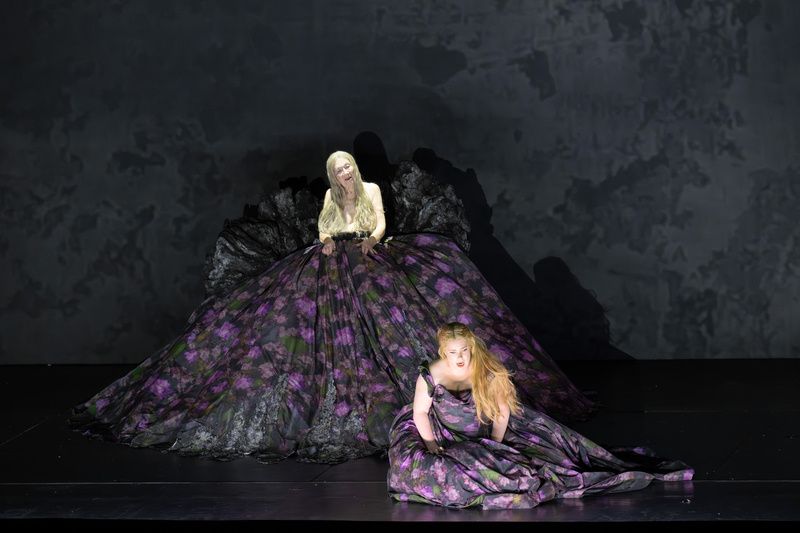
The third act begins with a powerful image of Erda emerging from beneath a mound of clothes, while her “double” remains visible above. Christopher Maltman’s Wanderer is deeply compelling, conveying growing resignation and desperation with great subtlety. His confrontation with Siegfried is intense, highlighting the latter’s youthful impatience and irreverence.
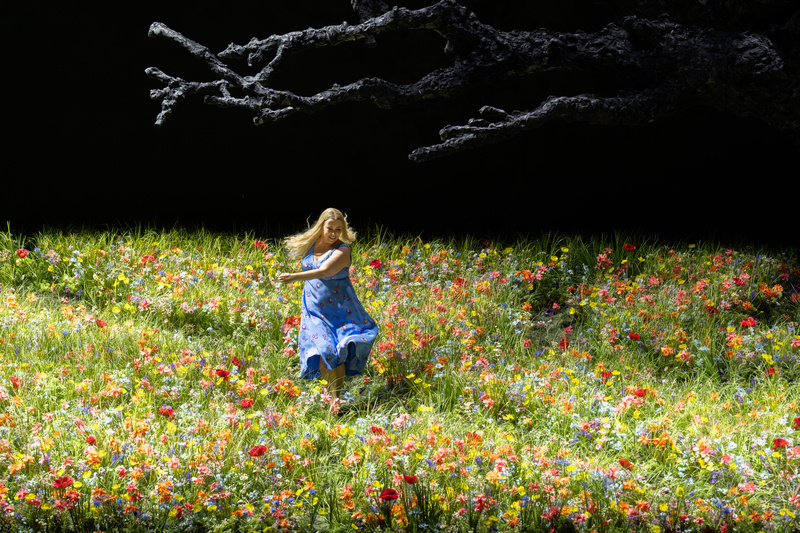
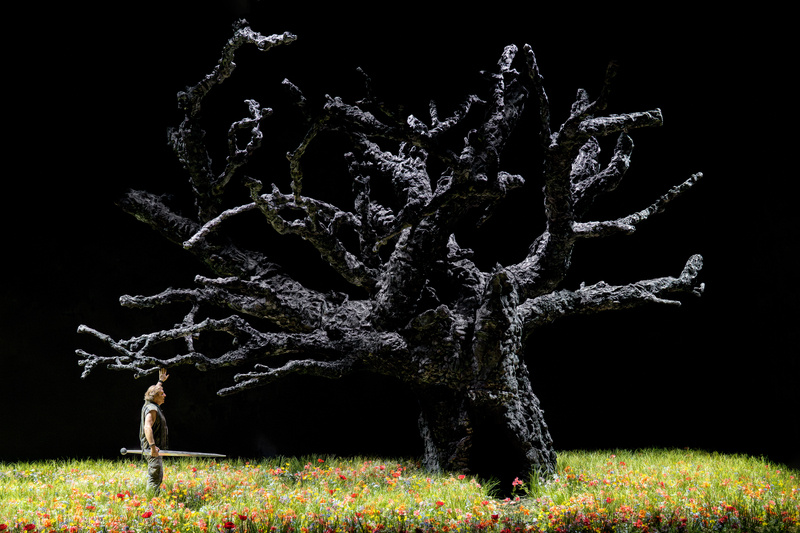
And then the final transformation: Brünnhilde’s rock is no barren mountain but a vibrant meadow bursting with colour and flowers. A large tree dominates the stage, its hollow trunk often housing the ever-present Erda.
Brünnhilde herself is revealed gradually—first a hand emerging from the earth—until Elisabeth Strid fully awakens. Her portrayal captures the profound psychological shift from divine warrior to vulnerable woman, not without regret. Her initial hesitation in the face of Siegfried’s overwhelming passion is rendered with great sensitivity.
Their final duet is both emotionally and visually radiant. Brünnhilde’s ecstatic movements across the flower-filled meadow express a joy that feels entirely earned. The reception from the audience at the end is one of enormous fascination and applause, which lasts for a long time. Also entirely earned.
But if I were asked today which Siegfried stands above all others, there would be no hesitation: Barrie Kosky’s Siegfried in London.
I must confess that I have always found Siegfried a challenging opera. In fact, it was my first Wagner opera. As a student at the Musikhochschule in Hannover, I attended a performance with fellow students. During the first act, I felt extremely bored and disengaged—two tenors shouting at each other endlessly, or so it seemed to me at the time. I was tempted to leave, but did not want to admit this to my friends. So I stayed for the entire five hours. In the end, the final hour redeemed everything—Wagner, after all, rarely fails to reserve his finest inspiration for the conclusion.
Even more recently, during McVicar’s Siegfried in Milan, I found myself again struggling during the first act, reflecting that the music had never fully appealed to me—though in other respects there was little to criticise.
A few weeks later, I happened to pass through London to visit a friend. By chance, I discovered that Barrie Kosky’s Siegfried, part of his emerging new Ring cycle, would be performed during my stay. Obtaining a ticket was not easy, but I succeeded—as I often do. I had previously seen Kosky’s Die Walküre in the cinema in Reykjavik and had been quite impressed. Still, nothing had prepared me for what I was about to experience.
This Siegfried became, beyond any doubt, the finest opera production I have ever witnessed. All earlier feelings of boredom and detachment vanished completely. What had changed?
Let us begin with the first act. Andreas Schager delivers an electrifying portrayal of Siegfried from the very first moment. His youthful physicality, his boyish enthusiasm, and his restless movement on stage are utterly convincing. Equally compelling is his inexhaustible energy, lasting to the very end. Kosky’s staging gives remarkable psychological depth to the character: we see Siegfried’s identity crisis unfold as he grows up in isolation with the grotesque Mime, knowing no one else but the animals and birds of the forest. He observes them—their family structures, their bonds—and contrasts them with his own situation. Could this repellent Mime truly be his father? And what of his mother?
Although he longs desperately to escape Mime, he repeatedly returns, driven by the need to uncover his origins—even if he must wrest the truth from him. Despite the bleakness of his circumstances, he remains vibrant, curious, and full of life. Both dramatically and vocally, Schager’s performance is extraordinary. He seems born for the role, singing with ease, clarity, and authority.
Peter Hoare’s Mime is equally remarkable. The role offers endless opportunities for grotesque characterisation, and Hoare seizes them all. His Mime is a masterclass in acting: every gesture, every facial expression, every vocal inflection is meticulously crafted. As one critic aptly observed, he is “the very incarnation of incompetent malice.” This interpretation will surely be remembered—and deserves to be.
Yet it is not only the brilliance of these performances, guided by Kosky’s masterful direction and Antonio Pappano’s revelatory conducting, that makes the production so compelling. Pappano uncovers a wealth of new sonorities in the score, making the music feel freshly discovered.
The visual world is equally striking. The first act opens with an almost fairy-tale image: Mime’s hut perched high in a tree, accessible only by a steep ladder. In his mounting frustration, Mime hammers futilely at the sword fragments, even beating his helmet against his head in rhythm with the orchestra. Once he learns from the Wanderer that only one who knows no fear can reforge Nothung, he realises that Siegfried alone is capable of forging Nothung.
Siegfried’s forging scene becomes a theatrical spectacle of astonishing imagination. He brings on stage complex, almost surreal machinery—unlike anything one has seen before—accompanied by noise, smoke, and fire as the sword is melted down and reforged. Throughout, his exuberant energy never falters.
The second act presents a complete transformation. Fafner’s lair appears as a snow-covered hill. Erda is present throughout, often seated on a bench, functioning as a kind of visual leitmotif across the cycle. During the Woodbird scene, she even assumes the role of the bird, with feathers and elongated fingers, moving her lips as though she were singing.
The interplay between Siegfried and Mime reaches new comic heights here. Fafner appears not as a dragon but as a towering figure clad entirely in gold, and his confrontation with Siegfried is infused with surprising humour, at times almost Chaplinesque, before his eventual death.
The third act begins with a powerful image of Erda emerging from beneath a mound of clothes, while her “double” remains visible above. Christopher Maltman’s Wanderer is deeply compelling, conveying growing resignation and desperation with great subtlety. His confrontation with Siegfried is intense, highlighting the latter’s youthful impatience and irreverence.
And then the final transformation: Brünnhilde’s rock is no barren mountain but a vibrant meadow bursting with colour and flowers. A large tree dominates the stage, its hollow trunk often housing the ever-present Erda.
Brünnhilde herself is revealed gradually—first a hand emerging from the earth—until Elisabeth Strid fully awakens. Her portrayal captures the profound psychological shift from divine warrior to vulnerable woman, not without regret. Her initial hesitation in the face of Siegfried’s overwhelming passion is rendered with great sensitivity.
Their final duet is both emotionally and visually radiant. Brünnhilde’s ecstatic movements across the flower-filled meadow express a joy that feels entirely earned. The reception from the audience at the end is one of enormous fascination and applause, which lasts for a long time. Also entirely earned.
Experiencing Siegfried in the cinema
A week later, I had the opportunity to experience the production again—this time in a cinema in Vienna. It proved to be an extraordinary complement to the live performance.
Not all opera lovers have the means to travel internationally. Cinema broadcasts offer invaluable access, bringing world-class productions into local communities. Moreover, they introduce new dimensions: the proximity to the performers, the visibility of facial expressions, the intimacy of detail.
These screenings are often enriched by behind-the-scenes material and interviews—this time including Antonio Pappano, technical staff, and assistant directors—all of which deepen one’s understanding of the production.
I am convinced that Barrie Kosky’s Ring at the Royal Opera House has the potential to become the defining Ring of the 21st century—perhaps even of all time. The level of performance is exceptional. Peter Hoare’s Mime and Andreas Schager’s Siegfried are unforgettable; Hoare’s facial expressions alone are a study in character acting, while Schager’s performance reaches an extraordinary level of intensity.
I found myself in a state of genuine ecstasy—heightened, perhaps, by the cinematic perspective, which revealed even more layers of this remarkable production.
This year has already offered further opportunities to experience Wagner beyond the opera house: Tristan und Isolde from the Metropolitan Opera was broadcast in cinemas worldwide in March, and Barcelona has made its new Tristan available online. Increasingly, it is possible to experience Wagner’s works from one’s own home—without losing their emotional impact.
The International Association (RWVI) highly appreciates and welcomes these initiatives and tends to do its best in spreading the word to its member societies.
Not all opera lovers have the means to travel internationally. Cinema broadcasts offer invaluable access, bringing world-class productions into local communities. Moreover, they introduce new dimensions: the proximity to the performers, the visibility of facial expressions, the intimacy of detail.
These screenings are often enriched by behind-the-scenes material and interviews—this time including Antonio Pappano, technical staff, and assistant directors—all of which deepen one’s understanding of the production.
I am convinced that Barrie Kosky’s Ring at the Royal Opera House has the potential to become the defining Ring of the 21st century—perhaps even of all time. The level of performance is exceptional. Peter Hoare’s Mime and Andreas Schager’s Siegfried are unforgettable; Hoare’s facial expressions alone are a study in character acting, while Schager’s performance reaches an extraordinary level of intensity.
I found myself in a state of genuine ecstasy—heightened, perhaps, by the cinematic perspective, which revealed even more layers of this remarkable production.
This year has already offered further opportunities to experience Wagner beyond the opera house: Tristan und Isolde from the Metropolitan Opera was broadcast in cinemas worldwide in March, and Barcelona has made its new Tristan available online. Increasingly, it is possible to experience Wagner’s works from one’s own home—without losing their emotional impact.
The International Association (RWVI) highly appreciates and welcomes these initiatives and tends to do its best in spreading the word to its member societies.
Selma Gudmundsdottir