


News
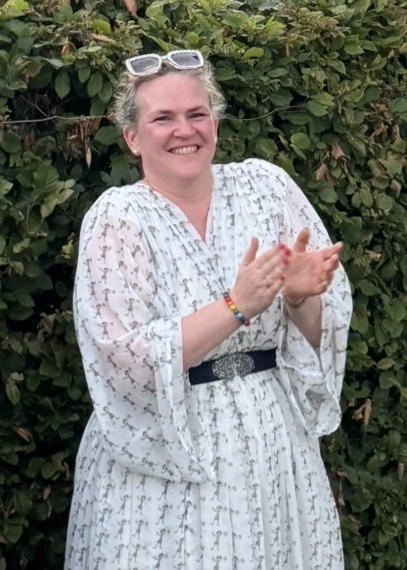
Chairwoman Arabella Hellmann explains how a bold idea grew into a professional opera production and a project that brought an entire community together.
Why should a Wagner society limit itself to lectures, opera visits and trips to Bayreuth? That was the question the Richard-Wagner-Verband Ammersee asked itself a few years ago. The answer was as simple as it was ambitious: perhaps the members should not only watch and listen to Wagner but also bring him to the stage themselves.
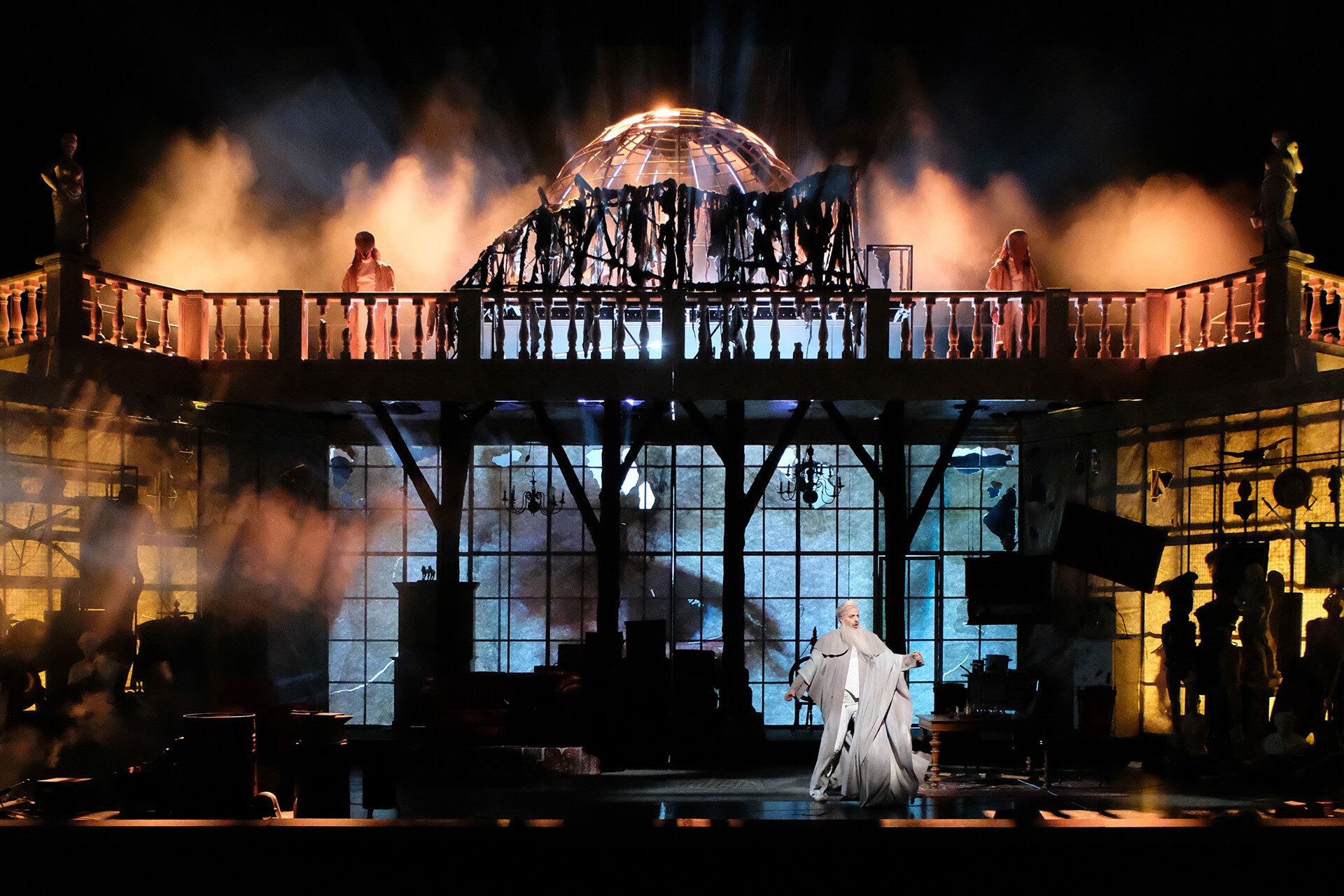
This happened for the first time in 2022, when the society staged Der fliegende Holländer on the shores of the Ammersee. As chairwoman Arabella Hellmann explains, it was, above all, a grand experiment.
"We wanted to take Wagner out of the traditional opera house and bring him to a place where you wouldn't immediately expect to find him: on the shores of the Ammersee. We were ourselves surprised that it turned out to be such a special experience, both for the audience and for everyone involved."
The production proved that Wagner can also come into his rightful place outside the traditional opera house. Perhaps the music even became more direct and accessible as a result. The unique setting literally brought the work closer to the audience. Following that success, the desire to stage another such production grew.
But a simple repeat performance of Der fliegende Holländer was not the intention. With Tannhäuser goes Ammersee, staged in July 2026 at the Carl Orff Museum in Dießen am Ammersee, the society wanted to take the next step — musically, organisation-wise, and in terms of the scale of the project.
Open the door to Wagner
The association's guiding principle is that Wagner's work should not only be preserved and discussed, but above all should remain alive. Of course, lectures, group visits to the opera, trips and Bayreuth form an important part of the society's activities. Yet at a certain point, the question arose: why should we always remain mere spectators?
According to Arabella Hellmann, producing an opera yourself creates a completely different relationship with the work. At the same time, it offers the opportunity to reach people who would not readily go to see a Wagner opera in a traditional opera house of their own accord.
"We want to open the door to Wagner a little wider. Visitors don't need to have read the libretto beforehand or know much about Wagner. They can simply come along, listen, watch and enjoy the atmosphere. Afterwards, they can decide for themselves: does this music move me, and do I want to find out more about it?"
It is precisely this accessible approach that is important. Wagner is still regularly perceived as difficult, heavy or elitist. By presenting his work in an open and unexpected setting, the society aims to lower such barriers. The music and the stories should once again be experienced directly: emotionally, in a contemporary way and without the need for prior knowledge.
An opera house without walls
Staging a Wagner opera in the open air does require a different way of thinking. An opera house offers a controlled environment, with fixed technical facilities and protection from external influences. In an open-air production, daylight, ambient noise and, above all, the weather constantly play a part.
According to Arabella Hellmann, that is precisely where the magic resides. When nature, evening light and music come together, moments can arise that cannot be recreated in the same way within an opera house.
A production of this kind requires both pragmatism and creativity. The Richard Wagner Association of Ammersee discovered that Wagner's works can be performed to a high standard even with a smaller orchestra, limited financial resources and unconventional spatial arrangements.
Ultimately, it is the people who are prepared to commit themselves fully to such an adventure who make the difference. And, Arabella Hellmann adds, anyone who stages an open-air opera naturally learns to be humble in the face of the weather. No matter how meticulous the preparations, nature cannot be directed.
A community creates its own opera
Behind some productions lie months — and in reality, even years — of preparation. Funding, grant applications, contracts with artists, rehearsal schedules, venue arrangements, technical requirements, costumes, publicity, ticket sales and the deployment of volunteers: everything has to be organised by a relatively small team.
"At a certain point, you really do feel as though you're running a small opera house for a few weeks."
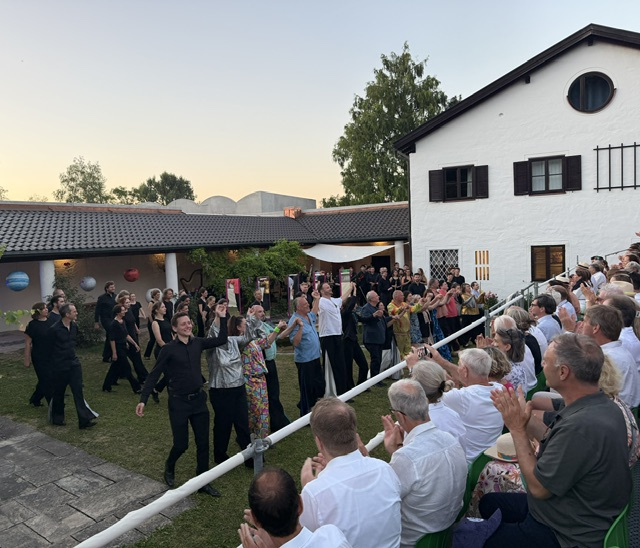
Yet the significance of Tannhäuser goes Ammersee lies not only in what happened on stage. Members took responsibility, local people lent a hand, host families provided accommodation for the artists, and local partners and funders committed themselves to the initiative. In this way, an opera production developed into a project involving the whole community.
Many residents began to refer to it as 'our Tannhäuser'. For Arabella Hellmann, it is precisely this sense of involvement that is one of the most valuable outcomes. The fact that visitors kept asking afterwards what the society would be doing next showed that the production had left a lasting impression.
Young artists are given responsibility
The involvement of young artists and international scholarship holders was an essential part of the project. For the organisation, talent development means more than simply awarding a one-off scholarship. It aims to support young artists over a longer period, build relationships with them and offer them concrete opportunities for further development.
This is not limited to singers alone. An opera is created through the collaboration of diverse artistic disciplines and fields. Young instrumentalists can play in the orchestra, singers can rehearse roles and gain stage experience, whilst former scholarship holders can also take on important responsibilities behind the scenes.
Arabella Hellmann sees this as talent development in its most practical form: young people working alongside experienced colleagues, being given responsibility and gaining experience within a major production. Sometimes, an initial encounter grows into a long-standing relationship. The society can then witness first-hand how a young artist develops and continue to offer support wherever possible.
Start by asking what is really possible
Not every Wagner society needs to produce a full-length opera straight away. According to Arabella Hellmann, the lessons learned at the Ammersee show above all that a small organisation can achieve more than it might initially think.
It can start with a staged concert, a collaboration with another cultural organisation or a special project involving young artists. Of course, realistic planning, reliable partners and people with plenty of time and perseverance are indispensable. Funders also need to be persuaded, existing networks utilised and, at times, highly creative solutions found.
But according to Arabella Hellmann, the most important lesson is simple: dare to give it a go.
"As a small organisation, you tend to focus on everything that isn't possible: not enough money, not enough people, no theatre of our own and no large orchestra. We've learnt to ask a different question first: what is possible?"
This means that Wagner is not viewed solely as a great cultural heritage that must be carefully preserved. His work becomes a resource through which new encounters, experiences and connections can be created even today.
Tannhäuser goes Ammersee proves that a small local initiative can set something big in motion. Or, as Arabella Hellmann herself puts it: "When people are truly passionate about an idea, astonishingly great things can emerge from a small Wagner society."